
How to Improve Boiler Efficiency and Reduce Fuel Consumption in Nepal
A practical guide for Nepalese factories to improve steam boiler efficiency, reduce fuel consumption, lower operating costs, and maintain reliable steam production.
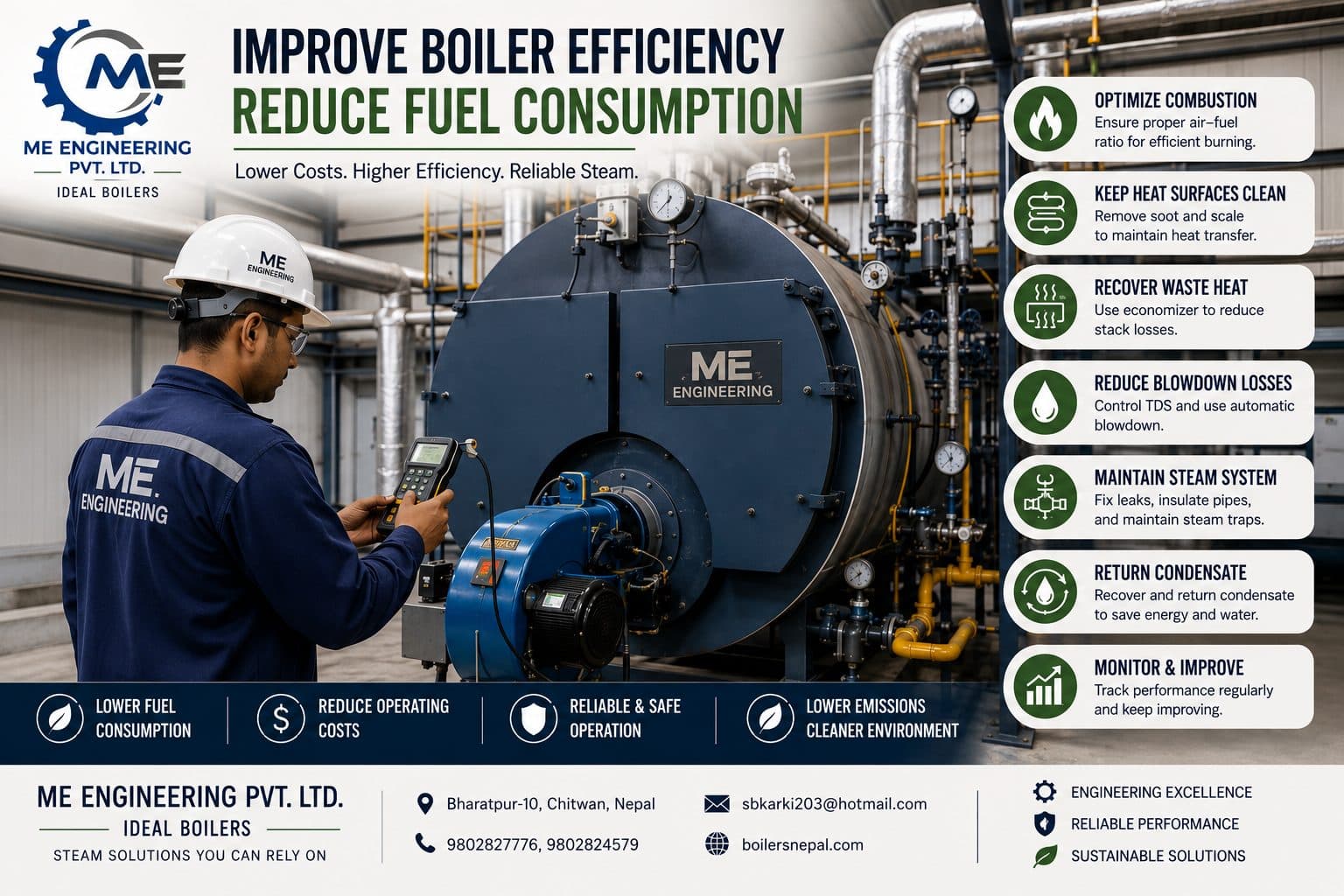
Why boiler efficiency matters
Improving boiler efficiency is one of the most effective ways for a factory in Nepal to reduce fuel consumption, lower operating costs, and maintain reliable steam production. Most industrial steam boilers lose energy through hot flue gas, excess combustion air, radiation from hot surfaces, blowdown losses, and poor steam distribution. A structured efficiency improvement program can often reduce fuel use without changing the boiler itself.
For manufacturers in food processing, dairy, textiles, pharmaceuticals, and other process industries, fuel is a major operating expense. Even a modest efficiency gain can reduce annual fuel consumption significantly.
Common causes of fuel wastage
The first step is identifying where energy is being lost. Typical causes include:
- Incorrect burner air settings
- Dirty heat-transfer surfaces
- Scale formation inside tubes
- Operating the boiler far below its rated load
- High blowdown rates
- Poor insulation on pipes and fittings
A boiler that appears to operate normally may still be wasting fuel continuously.
Tune combustion regularly
Proper combustion is the highest-impact maintenance activity. Excess air cools the furnace and sends heat up the chimney, while insufficient air causes incomplete combustion and soot.
Best practice:
- Measure flue gas oxygen (O₂) and carbon monoxide (CO).
- Adjust burner air dampers according to the fuel used.
- Clean burner nozzles and fuel filters.
- Record readings after every adjustment.
- Verify flame shape and stability.
Combustion testing should be performed periodically, especially after fuel quality changes.
A simple efficiency checklist for factory manager
Use this monthly checklist:
- Combustion tested and adjusted
- Burner cleaned
- Tubes inspected or cleaned
- Steam leaks repaired
- Steam traps checked
- Condensate return operating correctly
- Fuel consumption reviewed against production
Consistent maintenance usually delivers better results than occasional major overhauls.
Conclusion
Nepalese industries can improve boiler efficiency significantly through proper combustion tuning, water treatment, heat recovery, steam-system maintenance, condensate return, and regular performance monitoring. These measures help reduce fuel consumption, lower emissions, improve steam reliability, and extend equipment life. ME Engineering supports industrial customers in evaluating boiler performance and implementing practical efficiency improvements suited to local operating conditions.