
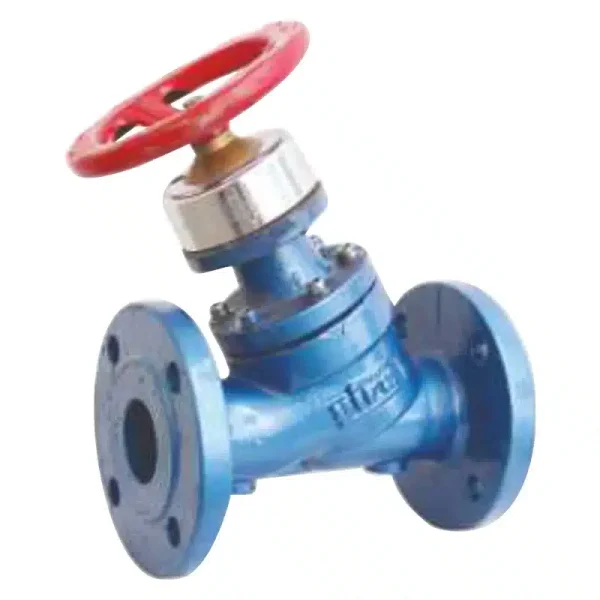
Balancing Valves
Balancing Valve
By Aira Valve Automation
Manual balancing valve that sets and locks per-branch flow for even hydronic distribution in HVAC and water systems, from small risers to large mains.
Specifications
- Size range
- 25 mm – 350 mm
- Temperature
- 85°C
- Pressure adjusting range
- 1 – 6 kg/cm² / 4 – 12 kg/cm²
- Body
- Cast iron / ductile iron / gun metal / ASTM A351 CF8
- Bonnet
- Cast iron / ductile iron / gun metal / ASTM A351 CF8
- Seals
- PTFE / NBR
- Media
- Water
- End connection
- Screwed / flanged
Overview
A manual balancing valve designed to precisely manage and stabilize fluid flow in HVAC and water distribution systems. By adjusting and fixing flow rates at each branch, it ensures optimal hydronic distribution and system efficiency. Available in cast iron, ductile iron, gun metal, and stainless steel bodies with screwed or flanged ends, sized from 25MM to 350MM for both small risers and large mains. Supplied, sized and serviced for HVAC and water systems across Nepal.
Features & Benefits
- Balancing valves solve a specific hydronic problem — without them, branches nearest the pump get too much flow and far branches get starved, so this valve fixes per-branch flow to deliver even heating or cooling across an entire HVAC system.
- Setting and locking a fixed flow rate per branch directly cuts energy cost, since the pump no longer has to overpressurize the whole system to satisfy the worst-served branch.
- Wide size span from 25MM to 350MM lets the same product line balance both small terminal risers and large distribution mains, simplifying specification across a whole building.
- Multiple body material options (cast iron, ductile iron, gun metal, CF8 stainless) let the valve be specified economically for closed hydronic loops or upgraded for open or corrosive water systems.
- Two adjusting ranges (1–6 and 4–12 kg/cm²) cover both low-head and higher-head systems, giving finer flow-setting resolution within the relevant band rather than one coarse range.
- PTFE/NBR seals with screwed or flanged ends and clear adjustment markings make field commissioning straightforward — the valve is set once during balancing and then left locked.