Pressure Reducing Valves
Pressure Reducing Valve - Liquid
By Darling Muesco
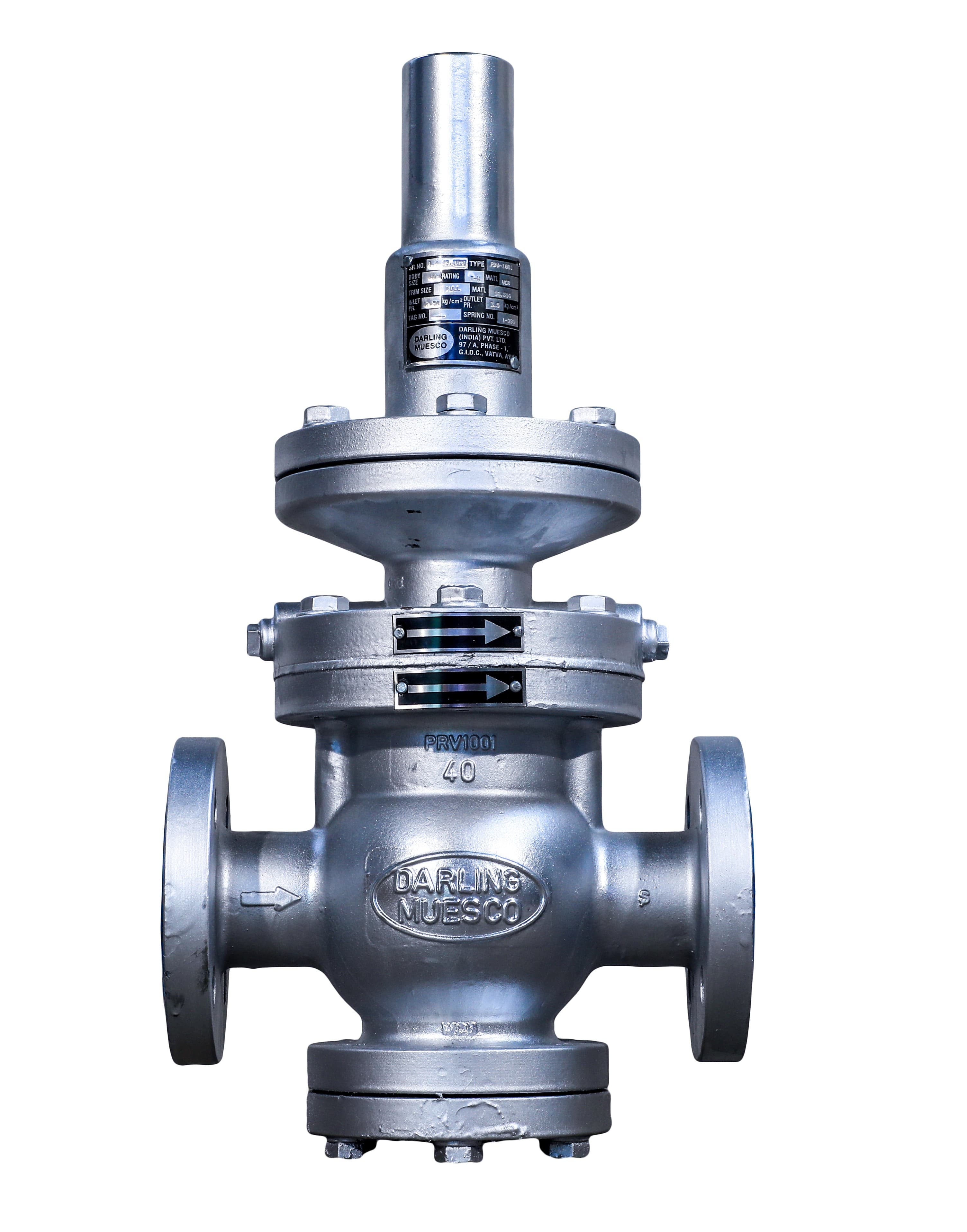
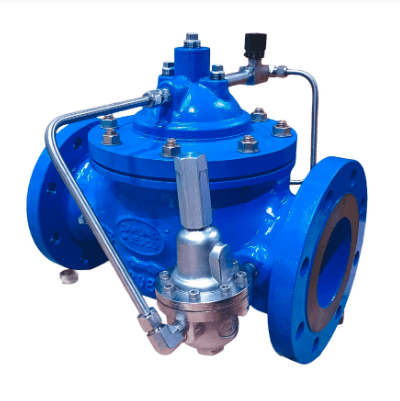
Automatic pilot-operated liquid pressure reducing valve that holds a constant outlet pressure regardless of inlet pressure or flow, using a Fig. 15 control pilot.
Specifications
- Size range
- 25 NB – 400 NB
- Fluid supported
- Liquid
- Pressure range (standard)
- 20 – 175 psig
- Pressure range (optional)
- 5 – 35 psig
- Pilot
- Fig. 15 pressure reducing control pilot
Overview
An automatic pressure reducing valve that reduces a higher inlet pressure to a constant lower outlet pressure for liquid service. Consists of a main valve paired with a Fig. 15 pressure reducing control pilot. Slight downstream pressure changes act on the top side of the control diaphragm, causing the main valve to counteract the variation and hold constant outlet pressure regardless of changes in flow rate or inlet pressure. Supplied, sized and serviced for water and process plants across Nepal.
Features & Benefits
- Pilot-controlled main valve architecture separates the sensing and actuation functions, which gives significantly tighter outlet pressure regulation than a direct-acting single-element design especially at higher flow rates.
- Constant outlet pressure regardless of inlet pressure variation or flow rate change means downstream equipment always receives the correct supply pressure without manual re-adjustment.
- Optional low-pressure range down to 5 Psig extends usability to low-pressure liquid distribution systems such as cooling water and condensate return, which standard PRVs cannot regulate accurately at low set points.
- Large size coverage up to 400 NB accommodates main distribution headers and large-bore process lines where most competitor PRV ranges stop at 200 NB.
- Diaphragm-based pilot sensing responds to very small pressure deviations, minimizing droop between the no-flow set pressure and the full-flow operating pressure.